











.jpg)
One minister. One summer. 150 whales.
This summer, up to 150 fin whales will be hunted and killed in the North Atlantic. The decision to allow it sits with one government minister in Reykjavík. There is still time to stop it.
What is happening
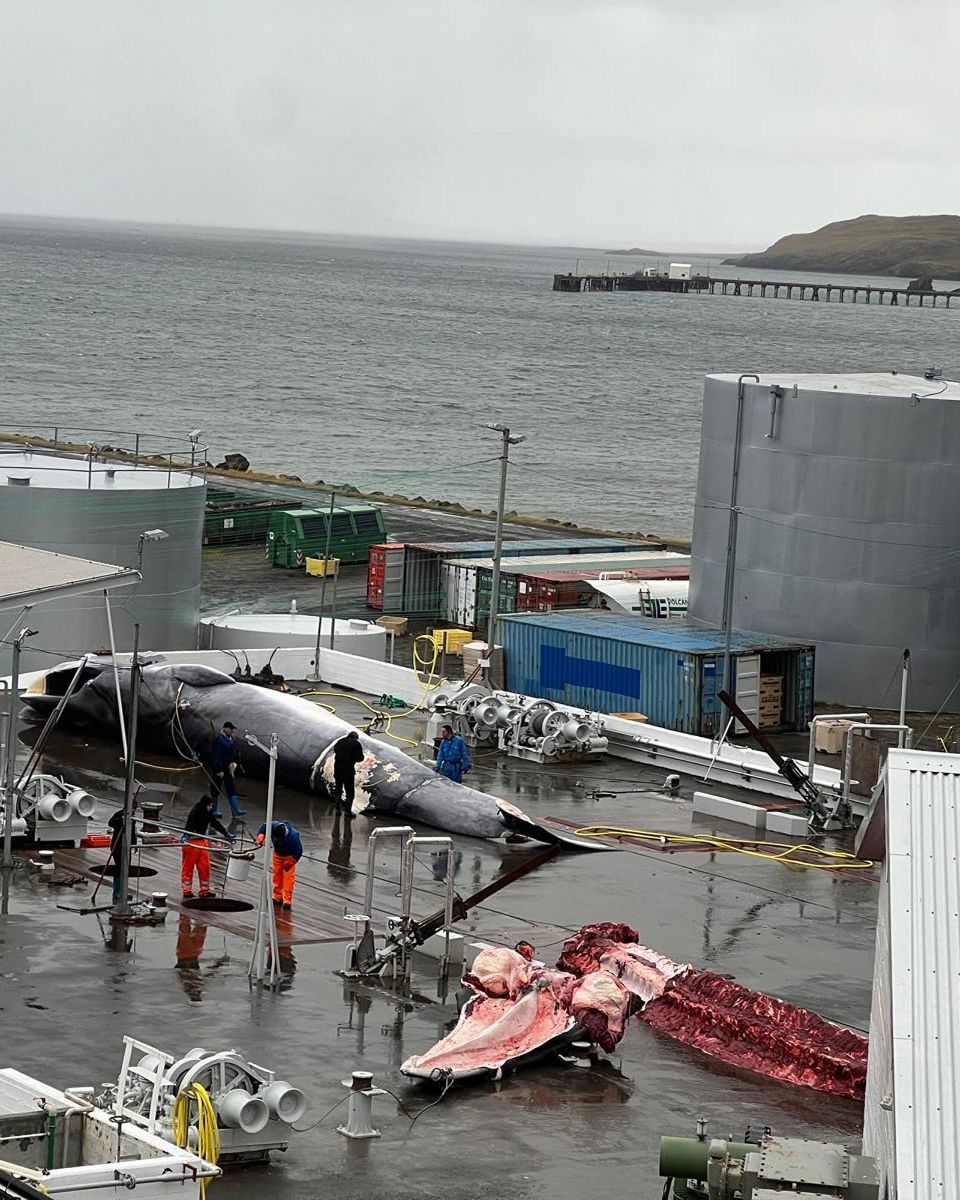
Iceland's only remaining commercial whaling company, Hvalur hf., has announced its intention to resume hunting fin whales this summer, after pausing operations for two years. The Icelandic government has committed to introducing legislation banning commercial whaling this autumn. The country's own Marine and Freshwater Research Institute has cut its catch advice to 150 fin whales, a roughly 28% reduction from previous quotas. Iceland's Minister of Industries, Hanna Katrín Friðriksson, has publicly stated that commercial whaling is not in the public interest.
And yet the hunt may still go ahead. The decision to authorise it, or to stop it, sits with the Minister.
This is not a question of whether whaling will end in Iceland. It is a question of how many whales die in the months before it does.
Why this matters
Fin whales are the second largest animals ever to have lived on this planet, surpassed only by blue whales. The IUCN classifies them as Vulnerable to extinction. They mature slowly. They reproduce slowly. Populations recover slowly from any pressure put on them. They are also among the most cognitively complex creatures in the ocean, with intricate social bonds, long memories, and communication that researchers are still working to understand.
Beyond what they are, there is what they do. Fin whales play a measurable role in carbon sequestration and nutrient cycling across the North Atlantic. A living whale moves nutrients vertically through the water column, fertilises plankton blooms, and in death sinks carbon to the seafloor for centuries. Killing one removes all of that.
The method of killing is the part most people would rather not know. A 2023 report by Iceland's own Food and Veterinary Authority found that more than 40% of whales struck by harpoons did not die immediately. The median time to death was 11.5 minutes. In one documented case, a whale took two hours to die. Iceland's own Council on Animal Welfare has concluded that current methods are incompatible with the country's animal welfare laws.
There is no commercial case left for any of this. The principal export market, Japan, has effectively collapsed. Whale meat from the 2023 season is still sitting unsold in Icelandic warehouses. Fewer than 2% of Icelanders eat whale meat regularly. Whale watching, by contrast, generates an estimated $26 million a year for Iceland. Live whales are worth more than dead ones, by every measurable standard.
What is left is one company, one minister, one summer, and an industry that has run out of every justification it ever had. The market is gone. The meat is unsold. The public is opposed.
The legislation is already drafted. The only thing missing is the decision to stop.
What you can do
Below is a letter to Minister Friðriksson, with President Halla Tómasdóttir copied. It asks the Minister to refuse the 2026 whaling licence and to begin revoking the existing one. It will take you less than a minute to sign.
Add your name. Send it.
The 2026 hunting season is weeks away.